The Short Version
- Ras El Hekma is backed by a roughly $35 billion Egypt–ADQ agreement signed in February 2024 — Egypt's largest single FDI deal, and part of the financing behind the country's 2024 currency stabilisation and IMF programme.
- On-the-ground infrastructure is real but early: roughly 13,800 feddans of land officially delivered as of April 2026, a 17km ring road and 5.3km Grand Canal under construction, and an international airport targeted to begin phased opening from Q4 2026.
- Egypt's tourism hit a record ~19 million visitors in 2025 (+21% YoY), with New Alamein — the North Coast's gateway city — posting a 450% jump in charter flights the same year.
- Wadi Yemm is currently the only precinct open for sale, at what the developer calls founder-phase pricing, ahead of the wider 13+ precinct masterplan being built around it.
- The long-term programme runs to roughly 2040 in three phases — this is a multi-decade bet on infrastructure delivery, not a short-term trade.
- None of this is financial advice. Verify current terms, delivery milestones and escrow arrangements directly before committing capital.
Government Investment
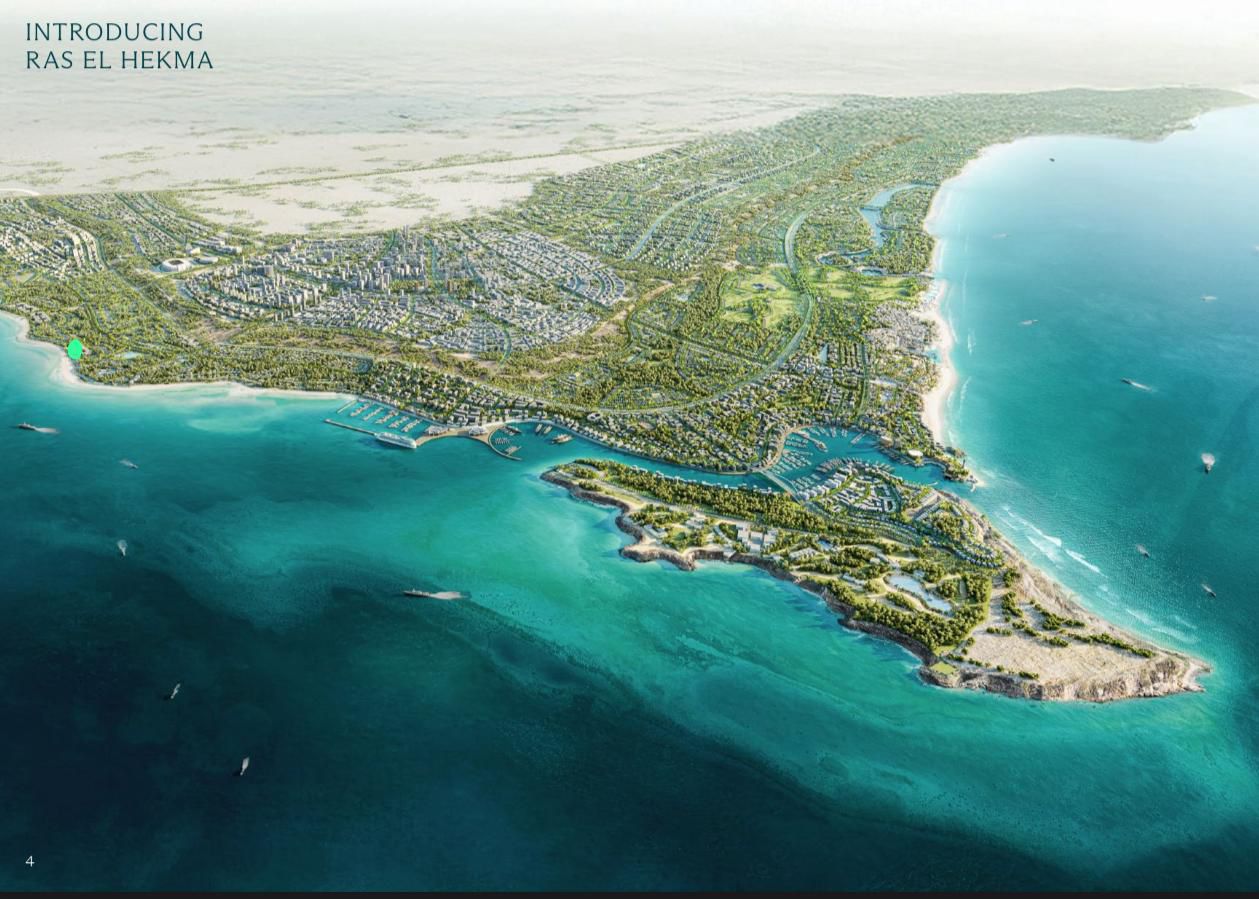
Ras El Hekma isn't a private developer speculating on undeveloped land — it sits on top of a sovereign-to-sovereign agreement. In February 2024, Egypt signed a deal with Abu Dhabi's ADQ worth roughly $35 billion, the largest single foreign direct investment in Egypt's modern history. The structure combines an upfront cash component with an equity stake in the project's master-developer vehicle, reportedly held around 65% by ADQ and 35% by the Egyptian state.
This deal mattered well beyond real estate: it was the financing instrument that helped unlock Egypt's March 2024 currency stabilisation and IMF programme — meaning the Egyptian government has a direct macroeconomic stake in Ras El Hekma succeeding, not just a planning-permission interest in it. Modon Holding, publicly listed on the Abu Dhabi Securities Exchange (ticker MODON) and majority-owned by ADQ and International Holding Company, was appointed master developer in October 2024.
What sovereign backing does and doesn't guarantee
Government-level backing meaningfully reduces the risk that this project simply stalls or is abandoned, which is a real and common risk in privately-funded off-plan developments. It does not guarantee any specific delivery date, unit price, or rate of return — those still depend on execution, and execution takes years on a project this size.
Talk to an advisor directly — no obligation, no scripted pitch.
Infrastructure
Infrastructure is where a masterplan either proves itself or doesn't, and Ras El Hekma has moved from paper to construction sites over the past two years. As of an April 2026 progress review chaired by Egypt's Prime Minister, roughly 13,800 feddans of land had been officially delivered to the project, with a further 5,400 feddans in process and 20,800 feddans still to be handed over.
On the ground, contractor Hassan Allam Holding is building the Ras El Hekma Ring Road — roughly 17km of six-lane dual carriageway integrated with utility networks that will serve as the backbone of Phase 1 — and excavating the 5.3km Grand Canal, a landmark waterfront feature. Egypt's Cabinet has separately allocated land in Marsa Matrouh governorate for a dedicated international airport, with a phased opening currently targeted from Q4 2026, alongside plans for a high-speed rail link to Cairo and Alexandria and a large marina and cruise terminal.
| Infrastructure Item | Status as of Mid-2026 |
|---|---|
| Land handover | ~13,800 feddans delivered; ~26,200 feddans in process or pending |
| Ring Road | ~17km, six-lane, under construction with utility integration |
| Grand Canal | 5.3km dry bulk excavation underway |
| International Airport | Land allocated; phased opening targeted from Q4 2026 |
| High-speed rail | Planned, linking Ras El Hekma to Cairo and Alexandria |
Figures compiled from Egyptian government statements and contractor announcements as of April–June 2026. Infrastructure timelines on projects of this scale commonly shift — treat target dates as current intentions, not guarantees.
Under construction is not the same as complete
The ring road, canal, and airport land allocation are genuine, verifiable progress — this is no longer a rendering-only project. But an airport "targeted" for phased opening in Q4 2026 is not the same as an airport in commercial operation, and buyers should track progress rather than assume dates will hold exactly as announced.
Tourism Growth
Ras El Hekma's investment case leans heavily on tourism demand, and the national numbers back that up. Egypt welcomed a record ~19 million tourists in 2025, a 21% increase over 2024 and well above the global tourism growth average of roughly 5% estimated by UN Tourism. The Ministry of Tourism has since raised its sights toward 30 million annual tourists by 2028, backed by a national plan to add 200,000 hotel rooms over five years.
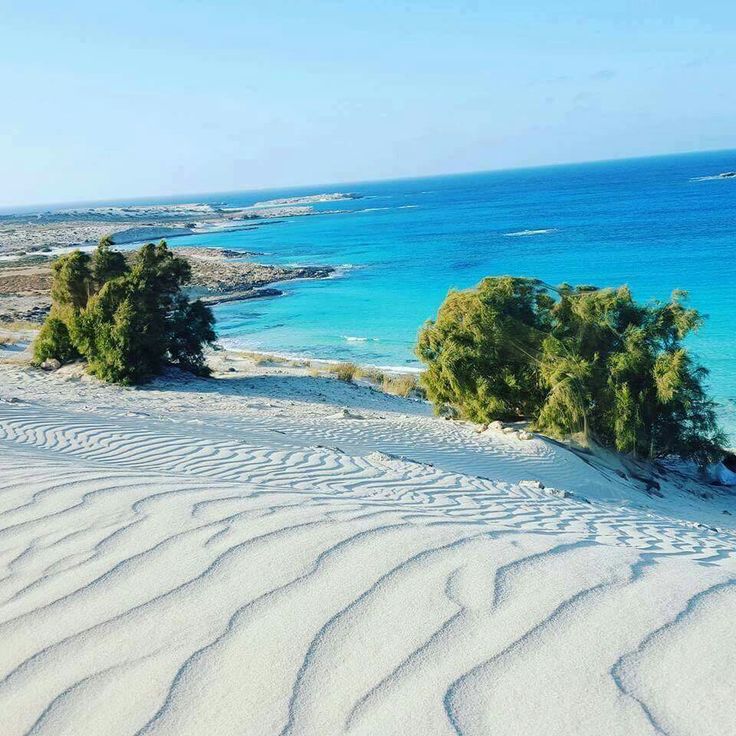
The North Coast specifically stood out within that growth. New Alamein City — the closest major gateway to Ras El Hekma — recorded a 450% surge in charter flights in 2025, which the Ministry of Tourism and Antiquities described as one of the standout performances of the year, evidence of the state's push to diversify beyond Nile and Red Sea tourism into beach and leisure travel on the Mediterranean coast.
.jpg)
For a residential-and-hospitality masterplan the size of Ras El Hekma, this matters directly: rental demand, hotel operator interest, and resale liquidity all track tourism volume into the region, not just headline construction progress.
We'll send the current North Coast occupancy and rental figures relevant to Wadi Yemm.
Early-Stage Pricing
Within Modon's masterplan, Wadi Yemm is currently the only precinct open to buyers. The developer describes its pricing as founder-phase — set ahead of the roads, hospitality, retail and marina infrastructure that will exist across the remaining precincts once they're built out. Published prices currently start from roughly EGP 15.9M for a 1-bedroom apartment, with a payment plan structured around a low combined entry cost (a 5% down payment plus a further 5% instalment) and up to 8 years to pay the balance, published as interest-free.
- First-mover pricing.Wadi Yemm is priced as the opening precinct, before the wider infrastructure around it has matured. In comparable master-planned developments, later-phase pricing typically benchmarks upward against what earlier phases achieved — a general pattern, not a guarantee specific to this project.
- Low combined entry cost.A 5% down payment plus a 5% second instalment brings the initial commitment to roughly 10% of the purchase price, lower than the 10–20% down payments common in other regional off-plan markets.
- Extended, interest-free instalments.Up to 8 years to pay the remaining balance, published without interest — a longer runway than the 3–5 year plans typical elsewhere.
"Early-stage" cuts both ways
Buying into the opening phase of a masterplan means paying before the surrounding city exists — which is exactly why the pricing is lower, and exactly why the outcome depends on that surrounding city actually getting built. This is not a guaranteed discount; it's compensation for taking on construction and delivery risk that a later buyer won't have to carry.
Get the official, unit-by-unit price list and payment schedule.
Long-Term Outlook
Ras El Hekma is structured as a multi-decade programme, not a two-year build. Public reporting on the masterplan describes three broad phases: Phase 1 (2024–2027) focused on foundational infrastructure — utilities, water, sewerage, the spine road network, electrical grid, and initial residential launches; Phase 2 (2027–2032), which scales the residential and commercial build-out and commissions the airport and port; and Phase 3 (2032–2040), completing the urban centre, business district, university and broader city.
That means the largest structural payoffs — full airport operation, a completed central business district, a mature tourism economy around the bay — sit in the 2027–2040 window, not this year or next. Full project delivery is positioned for 2040 and beyond, with continued build-out expected indefinitely after that.
A plain-language way to think about the timeline
An investor buying today is closer to buying into a construction-phase infrastructure story than a finished lifestyle destination. That's the trade-off behind founder-phase pricing: lower entry cost today, in exchange for years of build-out before the full masterplan — and the value it's meant to unlock — is actually in place.
Why Wadi Yemm Is Positioned to Benefit
Put those five factors together — sovereign-backed capital, infrastructure now visibly under construction, record tourism growth concentrated on this exact stretch of coast, pricing set before the surrounding city exists, and a long build-out horizon that rewards early positioning — and Wadi Yemm sits at the intersection of all of them, by design rather than by coincidence.
It is the first residential precinct released within the entire Ras El Hekma masterplan, which means it captures three specific advantages the later precincts won't have in the same way:
- First claim on infrastructure proximity. Wadi Yemm sits closest to the initial ring road, canal and early utility works already under construction — the same infrastructure the rest of the masterplan is being built outward from.
- The lowest pricing the masterplan is likely to see. As precinct one, it's priced before the airport, marina, business district and later precincts materially raise the area's baseline value — a position later buyers structurally cannot access.
- Direct exposure to the tourism growth already underway. New Alamein's 450% charter-flight surge and the North Coast's role in Egypt's 30-million-tourist target flow disproportionately toward the precinct that's actually open, staffed, and sellable today.
- The strongest institutional backing on offer. Modon Holding's ADX listing and ADQ ownership give Wadi Yemm's buyers direct exposure to the same balance sheet underwriting the entire $35 billion programme — not a smaller, standalone developer's promise.
To be direct about the trade-off
Being first also means being earliest into construction risk, with a delivery horizon around 2027–2028 and a return that depends on Phase 2 and Phase 3 of the wider masterplan actually landing on schedule between now and 2040. Wadi Yemm's position is genuinely advantaged within this specific project — that's not the same as saying it's risk-free.
This tends to suit buyers who...
- Want direct exposure to Egypt's largest sovereign-backed infrastructure programme, not just a single compound
- Can hold through a multi-year delivery window without needing short-term income
- See value in being priced ahead of the surrounding city rather than waiting for it to be finished
- Are comfortable evaluating a long-dated, multi-decade masterplan rather than a two-year build
Worth pausing if you...
- Need income or liquidity from the property in the short term
- Aren't comfortable with pre-construction and phased-infrastructure risk
- Want a fully built, finished community to move into now rather than over the coming years
- Haven't yet reviewed the current, live pricing and delivery terms directly with the developer
Key Takeaways
- Ras El Hekma is backed by a ~$35 billion Egypt–ADQ agreement (Feb 2024), the largest single FDI deal in Egypt's history, tied to the country's 2024 currency stabilisation and IMF programme.
- Infrastructure is genuinely under construction — ~13,800 feddans delivered, a 17km ring road, a 5.3km Grand Canal, and an airport targeted for phased opening from Q4 2026 — but full delivery runs to roughly 2040.
- Egypt's tourism hit a record ~19 million visitors in 2025 (+21% YoY), with North Coast gateway New Alamein posting 450% charter-flight growth the same year.
- Wadi Yemm's founder-phase pricing reflects being first into construction risk, not a guaranteed discount — later phases typically benchmark upward, but that's a general pattern, not a promise.
- As the first precinct released, Wadi Yemm sits closest to current infrastructure, carries the masterplan's likely lowest entry pricing, and has direct exposure to Modon's sovereign-backed balance sheet.
- None of this replaces independent due diligence — confirm current pricing, delivery milestones and escrow terms directly before committing capital.